
How the SPM Clean Process is Supported in a Wet Bench Process
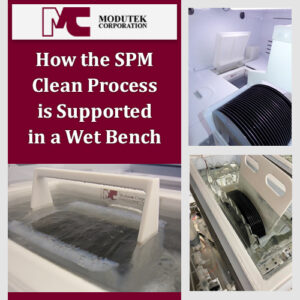
Editor’s Note: This article was originally published in Oct 2016 and has been updated with additional information and reposted in May 2023. Semiconductor manufacturing involves multiple processing steps which include cleaning silicon wafers. The sulfuric peroxide mix (SPM) cleaning process is widely utilized in semiconductor manufacturing. The process utilizes a mixture of approximately 3 parts […]
How Standard Clean Particle Removal (SC1 Clean) is Supported in a Wet Bench Process
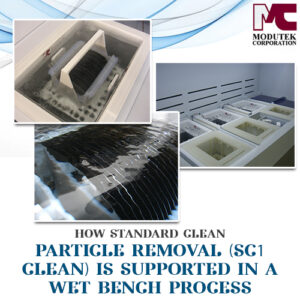
Editor’s Note: This article was originally published in April 2015 and has been updated with additional information and reposted in April 2023. The SC1 clean process is a widely used method for removing particles and other contaminants from silicon wafers. This process involves using a solution of ammonium hydroxide and hydrogen peroxide, which is heated […]
How to Order a Wet Bench for Your Specific Process Requirements
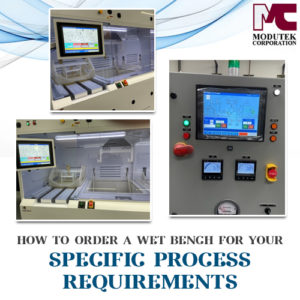
Wet processing used in semiconductor manufacturing includes many complicated process steps which need to be taken into account when ordering new wet bench equipment. When selecting a supplier, experience and capabilities have to be evaluated. Physical requirements such as space and output volume are essential. The degree of automation required also plays a significant role. […]
Why Stainless-Steel Stations Are Needed for Solvent Processing
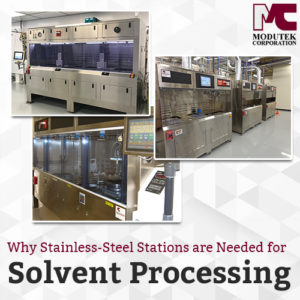
During silicon wafer fabrication, BEOL (Back End of Line) processes may require solvent-based stations to ensure compatibility with semiconductor manufacturing steps. FEOL (Front End of Line) acid-based chemistry may not be suitable for BEOL finishing. Instead, stainless-steel stations with solvents such as acetone, IPA (Isopropyl Alcohol) or EDP (Ethylenediamine Pyrocatechol) complete wafer etching, stripping, and […]
Reasons to Use a Wet Bench Manufacturer with In-House Expertise
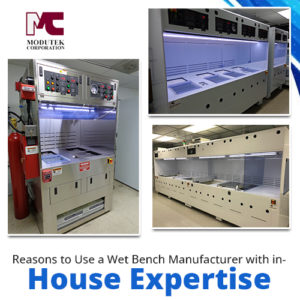
When dealing with third-party distributors who offer wet bench stations built by someone else, customers often pay more and get less. A wet bench manufacturer that designs and builds its own wet bench equipment in-house develops the expertise and capabilities needed to satisfy customer requirements. The manufacturer can respond directly to customer requests and design […]
Why Ergonomics and Safety Are Important in Wet Bench Station Design
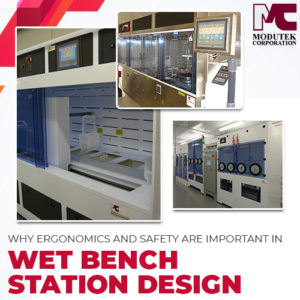
Because semiconductor manufacturing with wet bench technology uses dangerous chemicals in many of the process steps, ergonomic design helps keep employees safe. Toxic and corrosive chemicals such as hydrochloric acid are used to clean, etch and strip silicon wafers in wet process stations. Ergonomics helps ensure that operators don’t have to strain or overextend themselves […]
How Automated Wafer Fabrication Equipment Optimizes Process Control
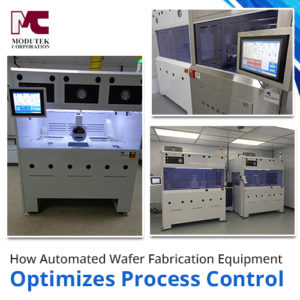
Fully or semi-automated silicon wafer fabrication equipment can reduce errors and improve repeatability in wafer processing while at the same time increasing flexibility. Automatic controls let operators change process parameters if required for different processes or for process optimization. Once a process runs in an optimized fashion, automated controls allow operators to make sure that […]
Important Things to Know Before Buying a Wet Bench Station
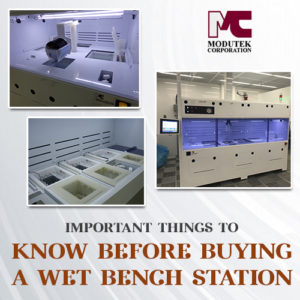
There are a number of process and production requirements that need to be considered before buying a wet bench station. In addition to knowing which process chemicals are needed, you also need to decide on the degree of automation and whether any customization is needed for your station. If your application requires the use of […]
How Stainless-Steel Stations Provide Safe Solvent Processing
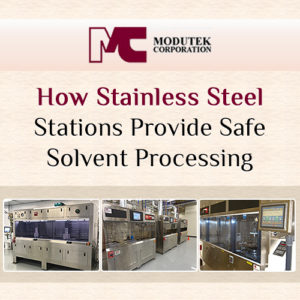
Solvents used in semiconductor manufacturing can remove oils and organic contaminants from silicon wafers in preparation for further processing steps. Acetone, isopropyl alcohol (IPA) and ethylene diproxitol (EDP) are solvents commonly used to clean wafers, remove photoresists, and in pattern transfers for the creation of microscopic structures on the wafer. The solvents are inflammable and […]
How Process Controls Are Improved with Automated Wet Bench Equipment
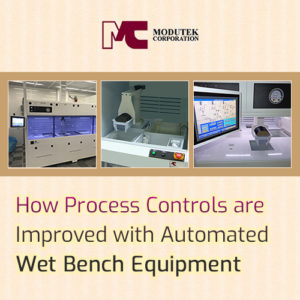
When semiconductor manufacturing is automated, tight process control can improve overall facility performance. An optimized manufacturing process can reduce consumption of consumables and production results are more uniform. Once a batch has run successfully, an automated process ensures that it will run the same way for subsequent batches. With good design, automation reduces silicon wafer […]