Modutek

Wet Bench Manufacturer | Wet Process Equipment | Modutek

Teflon Tanks

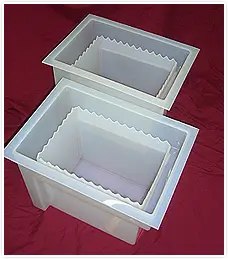
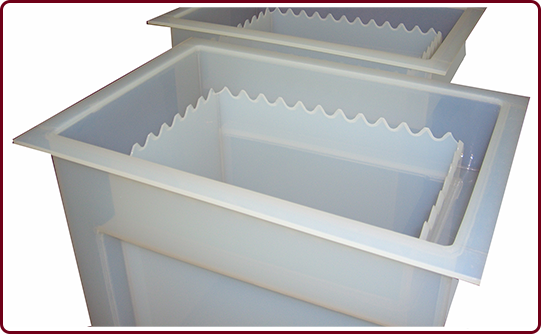
A Teflon tank is a semiconductor wet processing tank built entirely from PFA Teflon, used to hold aggressive chemistries such as KOH and TMAH that would degrade less resistant tank materials over time. Because Teflon holds up to a wider range of aggressive wet etch chemistry than materials like polypropylene, it’s the standard choice for high-temperature alkaline etch and clean processes.

Heated Teflon Tanks

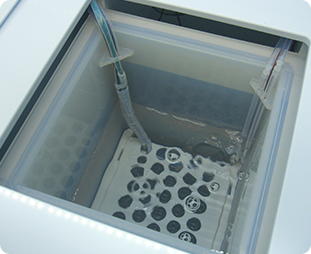
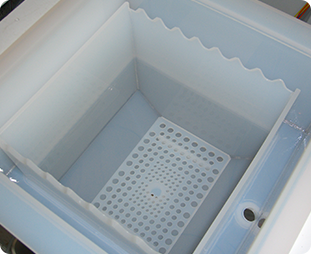
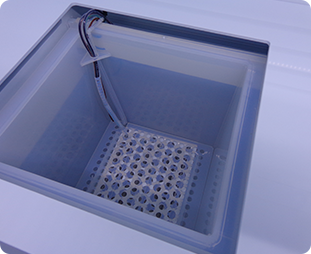
All Modutek Series Teflon® tanks are available in three configurations: Temperature-controlled recirculating baths, temperature-controlled static baths, and Teflon ambient baths. All models are available in standard carrier sizes for single or double capacity. We also build custom sizes to match any requirement. Our module design allows for installation into any new wet etching station configuration. It also allows for easy upgrades to your existing etching stations. Heat sources are available in two options: Teflon® inline heating or immersion heating in the overflow weir. We work directly with you to design the best layout configuration that fits your current clean room facilities layout. If you need more information about our Teflon Tanks, including features, options, or configurations, or to get a quote for your specific requirements, call us at 866-803-1533.
All Modutek Series Teflon® tanks are available in three configurations: Temperature Controlled Recirculating Baths, Temperature Controlled Static Baths and Teflon ambient baths. All models are available in standard carrier sizes for single or double capacity. We also build custom sizes to match any requirement. Our module design allows for installation into any new wet etching station configuration. It also allows for easy upgrades into your existing etching stations. Heat sources are available in two options: Teflon® inline heating or immersion heating in the overflow weir. We work directly with you to design the best layout configuration that fits your current clean room facilities layout. If you need more information about our Teflon Tanks, including features, options or configurations, or to get quote for your specific requirements, call us at
866-803-1533.

Available Models of Teflon Tanks:

teflon-tanks

Heated Teflon Tanks

All Modutek Series Teflon® tanks are available in three configurations: Temperature Controlled Recirculating Baths, Temperature Controlled Static Baths and Teflon ambient baths. All models are available in standard carrier sizes for single or double capacity. We also build custom sizes to match any requirement. Our module design allows for installation into any new wet etching station configuration. It also allows for easy upgrades into your existing etching stations. Heat sources are available in two options: Teflon® inline heating or immersion heating in the overflow weir. We work directly with you to design the best layout configuration that fits your current clean room facilities layout. If you need more information about our Teflon Tanks, including features, options or configurations, or to get quote for your specific requirements, call us at 866-803-1533.

Teflon-overflow-tank img

Available Models of Teflon Tanks:

Benefits

Features

Specifications

Construction Materials

Options

Benefits

Features

Specifications

Construction Materials

Options

Benefits

Benefits

Features

Features

Specifications

Specifications

Construction Materials

Options

Options

Teflon Tank FAQs

1.Why Is PFA Teflon Used Instead of Polypropylene for KOH and TMAH Baths?
KOH and TMAH are strong alkaline etchants typically run at elevated temperature, conditions that degrade polypropylene faster than they degrade PFA Teflon. Teflon’s resistance holds up across a wider temperature and chemistry range, which is why it’s specified for these baths rather than the polypropylene construction used on less aggressive chemistries elsewhere in Modutek’s product line.
2. What Is the Difference Between the TFa, TI, and TT Series?
The TFa Series is built for high-temperature overflow operation, the TI Series for high-temperature static operation, and the TT Series for ambient-temperature operation. The distinction between overflow and static comes down to how fluid moves through the tank during processing, while the TT Series is the option for applications that don’t require active temperature control at all.
3.What Is the Difference Between Inline Heating and Immersion Heating in the Overflow Weir?
Inline heating warms the fluid as it circulates through the system outside the main process chamber, while immersion heating places the heat source directly in the overflow weir where fluid collects during operation. Which option fits better depends on the specific process and layout, which is why Modutek offers both rather than a single fixed heat source.
4.Why Do KOH and TMAH Wet Etch Baths Need High-Limit and Drain Interlocks?
Baths running hot alkaline chemistry carry real risk if fluid level drops too low or temperature climbs past a safe threshold while the heater is still running. Low-level, high-limit, high-temperature, and drain interlocks are what shut the system down automatically under those conditions, rather than relying on an operator to catch the problem manually.
5. Can a Teflon Tank Be Retrofitted Into an Existing Wet Bench Station?
Yes. The module design is built to install into a new wet etching station or upgrade into an existing one, so a facility running an older tank material can typically swap in a Teflon tank without redesigning the whole station around it, provided the footprint and facility requirements are confirmed against the existing layout first.

Request a Quote for Your Teflon Tank

Modutek designs and builds its Teflon tank series in-house at its San Jose, California, facility, in PFA Teflon construction, sized and configured around each customer’s KOH, TMAH, or other high-temperature alkaline etch process.

For help specifying a Teflon tank for a new or existing wet etching station, contact us, and a member of the Modutek team will follow up.