1.What Is the Difference Between Megasonic and Ultrasonic Cleaning?
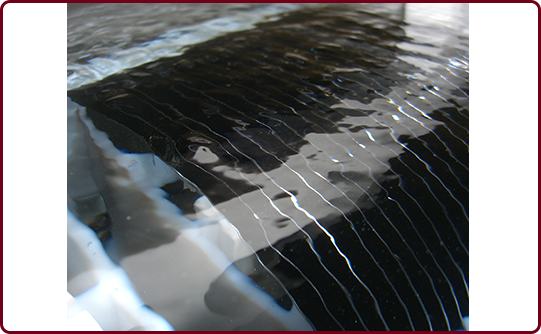
Ultrasonic cleaning uses lower frequencies that produce strong cavitation, which cleans aggressively but can damage fine features. Megasonic cleaning uses much higher frequencies (from 950 kHz to 3 MHz) that generate gentler pressure waves and acoustic streaming, thereby removing sub-micron particles while protecting delicate device structures. This makes megasonic the preferred method for advanced wafer and substrate cleaning.
2. What Is the Difference Between the MSI and MSD Series?
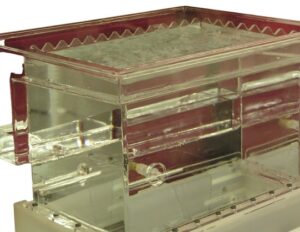
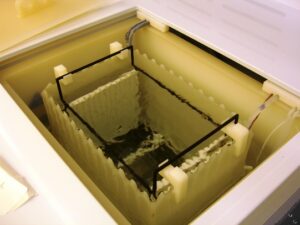
The MSI Series is an indirect bath design that removes 0.1-micron particles and operates at temperatures up to 140°C. The MSD Series is a direct design with a Teflon-coated transducer plate mounted inside the tank, rated up to 70°C and ideal for SC1 applications. The MSD configuration is particularly suited to upgrading an existing bath because the transducer installs directly into the tank.
3.What Particle Sizes Can Megasonic Cleaning Remove?
Modutek megasonic systems remove particles down to 0.1 micron. Because acoustic energy acts on particles that chemistry alone cannot lift, megasonic cleaning is used where sub-micron particle counts must meet strict limits, such as pre-diffusion, post-CMP, and SC1 cleaning steps.
Yes. The Direct MSD Series places its Teflon-coated transducer plate directly in the tank, allowing it to be installed in an existing bath as an upgrade rather than requiring a new system. This allows a facility to add megasonic particle removal to its current wet processing equipment with minimal disruption.
Megasonic cleaning is used in the semiconductor, flat panel display, hard disk, solar, and crystal industries. These applications all require the removal of sub-micron particles from sensitive surfaces, and megasonic energy provides the cleaning needed to avoid damaging fine features or thin films.