Modutek

Wet Bench Manufacturer | Wet Process Equipment | Modutek

Quartz Tanks

QFa Series Quartz Tanks/Baths:

High Temperature Recirculating Quartz Tanks:

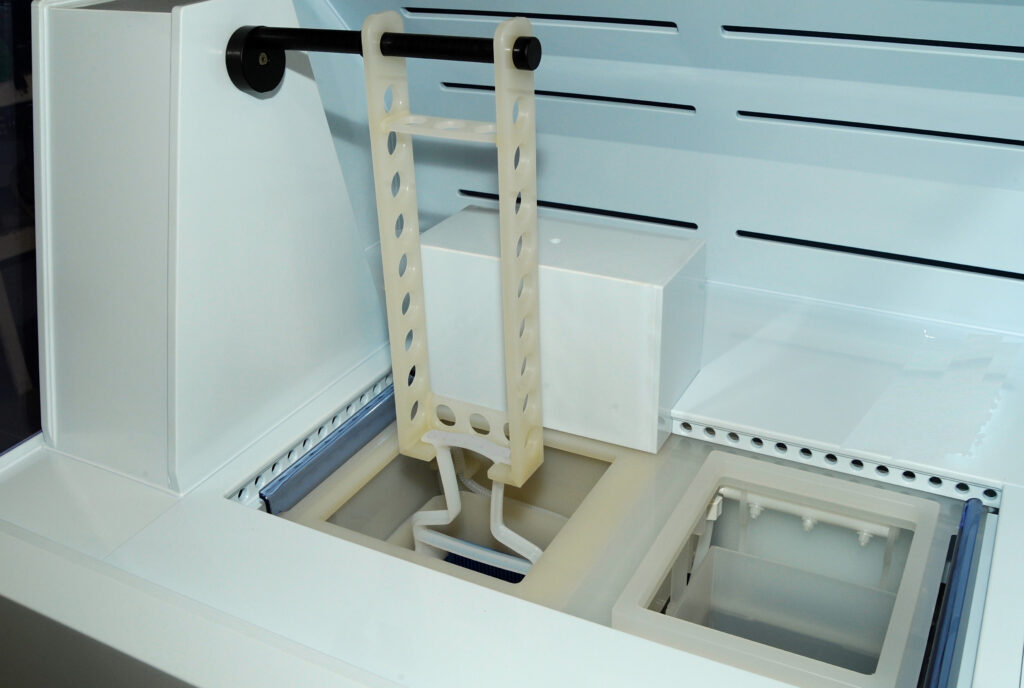
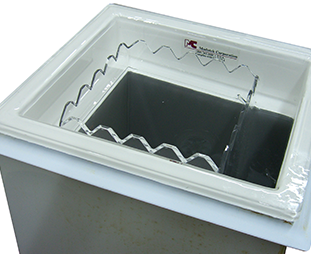
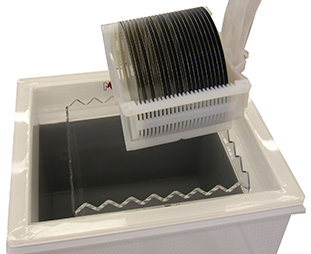
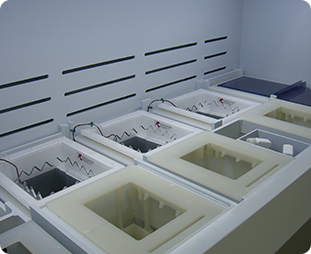
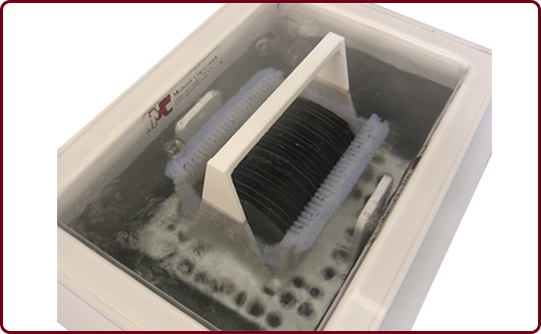
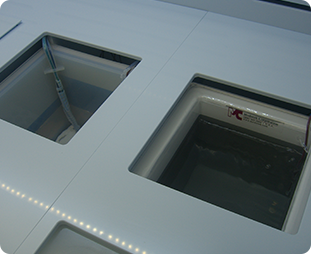
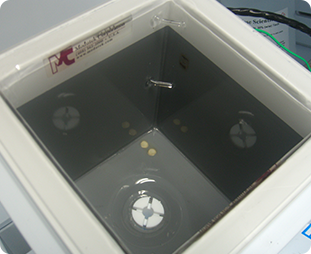
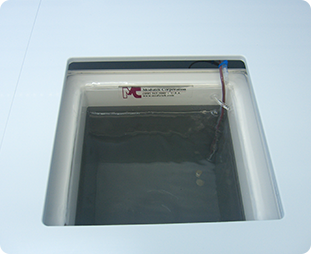
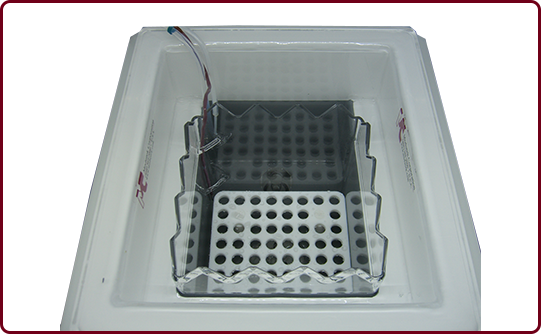
Quartz tanks are process baths made from flamed fused quartz that hold heated acids, oxidizers, and rinse chemistries during semiconductor wafer cleaning and etching. Flamed fused quartz is the standard material because it remains chemically inert in hot mineral acids and does not leach metallic ions into the chemistry. Quartz tanks come in two configurations: recirculating baths and constant-temperature baths. Modutek Corporation designs and builds both in-house at its San Jose, California, facility, in standard cassette sizes and custom dimensions.

How Quartz Tanks Work

Heat comes from resistance heaters bonded directly to the quartz vessel sidewalls, four-sided on the QFA Series and five-sided on the Qa Series, rated from 2.0 kW to 6.0 kW at 208 VAC, depending on the model. Bath temperature ranges from 30 to 180 degrees Celsius, with control to within ±1 degree, and heating at roughly 2 degrees per minute, supporting etching, stripping, and cleaning steps in H₂SO₄, H₂O₂, and SC1 chemistries.
Quartz Tanks QFa Series -5
Quartz Tank QFa Series with agitator

QFa Series Quartz Tanks/Baths:

High Temperature Recirculating Quartz Tanks:

The Modutek QFa Series of High Temperature Recirculating Quartz Tank is the result of almost 30+ years of evolutionary bath design and a passion for establishing the quality standard in quartz tanks. At Modutek, we define quality by the degree of safety, reliability, and cost of ownership integrated into every aspect of our quartz tank products.
Quartz Tanks QFa Series -5

Benefits

Features

Specifications

Facility Reaquirements

Construction Materials

Options

Benefits

Features

Specifications

Facility Reaquirements

Construction Materials

Options

Benefits

Benefits

Features

Features

Specifications

Specifications

Facility Reaquirements

Construction Materials

Options

Options

QFa Matrix

Model nomenclature: model code, number of cassettes and size of cassettes. eg. QFa26(QFa series-2-6”)
Note: Add approximately 4” for drain on overall depth

Qa Series Quartz Tanks/Baths:

Constant Temperature Quartz Tanks:
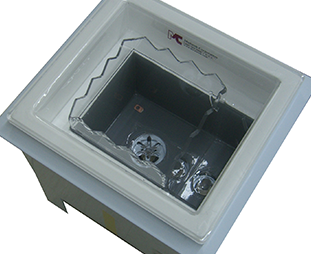
The Qa Series Constant Temperature Quartz Tank is the result of over thirty years of evolutionary bath design and a passion for establishing the quality standard in quartz tanks. At Modutek, we define quality by the degree of safety, reliability, and cost of ownership engineered into every aspect of all our products.
Quartz-Tanks-Qa-Series

Qa Series Quartz Tanks/Baths:

Constant Temperature Quartz Tanks:
The Qa Series Constant Temperature Quartz Tank is the result of over thirty years of evolutionary bath design and a passion for establishing the quality standard in quartz tank. At Modutek, we define quality by the degree of safety, reliability, and cost of ownership engineered into every aspect of all our products.
Quartz-Tanks-Qa-Series

Benefits

Features

Specifications

Facility Reaquirements

Construction Materials

Options

Benefits

Features

Specifications

Facility Reaquirements

Construction Materials

Options

Benefits of Qa Series Quartz Tanks

Benefits

Features

Features

Specifications

Specifications

Facility Reaquirements

Construction Materials

Options

Options

Qa Matrix

Model nomenclature: model code, number of cassettes and size of cassettes. eg. Qa26(Qa series-2-6”)

Quartz Tank FAQs

1. Can Quartz Tanks Be Used with Hydrofluoric Acid?

No. Hydrofluoric acid dissolves silicon dioxide, and flamed fused quartz is silicon dioxide, so HF attacks the tank itself at any concentration, including dilute HF and buffered oxide etch. HF, BOE, and HF-based oxide strips require a fluoropolymer bath instead. Modutek supplies Teflon tanks for these steps. On a wet bench, running both, the HF station uses Teflon, and the remaining stations use quartz.

2. How Do Quartz Tanks Compare to Teflon Tanks?
The two materials cover different halves of the chemistry set. Quartz is inert to mineral acids and oxidizers and handles higher bath temperatures, so it suits SPM, RCA, and hot acid work. Teflon is the only practical option for HF and BOE, and it is also the standard choice for hot caustic such as KOH. Quartz has one further practical advantage: it is transparent, so operators can see the bath level, cassette position, and any particulates directly without opening the lid.
3. Why Does the Deck Cutout Need to Be Larger Than the Quartz Tank?

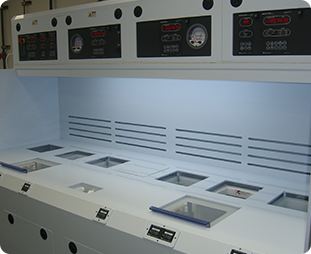
The cutout has to clear the tank flange and the deck area it sits on, not just the vessel itself, which is why the deck cutout and deck area figures in the matrices are both larger than the vessel ID. Below deck, you also need clearance for the drain, so allow approximately 4 additional inches in overall depth beyond the figure in the table. Facility planners should size the bench opening from the deck cutout column, not the vessel dimensions.

4. What Causes a Quartz Tank to Fail in Service?

Thermal shock is rarely the cause. Flamed fused quartz has extremely low thermal expansion, which is exactly why it survives repeated heat-up and cool-down cycles that would crack other glass. The two real failure modes are mechanical and chemical. Mechanically, a chip or a deep scratch from cassette handling becomes a crack initiation site that propagates under thermal cycling, so damaged tanks should be replaced rather than run. Chemically, quartz is slowly attacked by strong alkali above roughly pH 9 at elevated temperatures, so hot caustic baths should be run in Teflon.

5. Does a Quartz Tank Add Metallic Contamination to the Bath?

No. Quartz tanks are fabricated from semiconductor-grade silicon dioxide, with no metallic constituents to leach, which is why they are used for cleaning steps whose entire purpose is to remove metal ions from the wafer surface. On QFa Series recirculating tanks, the all-quartz flare connections extend that same inertness throughout the fluid path, so the chemistry never contacts a dissimilar material between the inlet and the drain.

Get a Quartz Tank Built for Your Process

Modutek designs, builds, and tests every quartz tank in-house at its San Jose, California, facility, with each vessel sized to your cassette configuration, chemistry, and wet bench deck layout.

Contact us if you need more information about using our quartz tanks to support your process requirements or to request a quote.