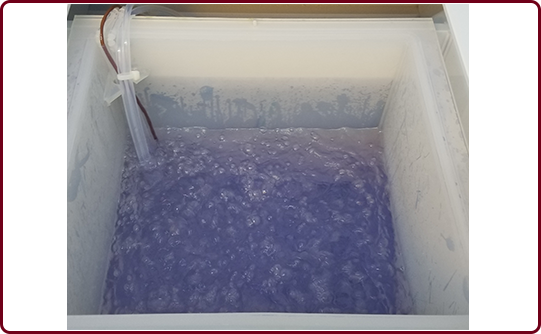
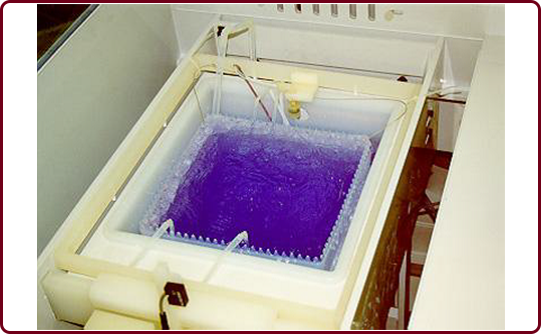
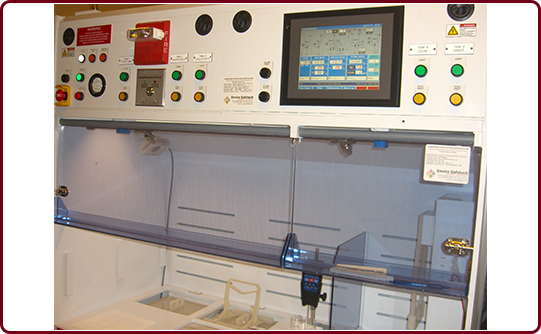
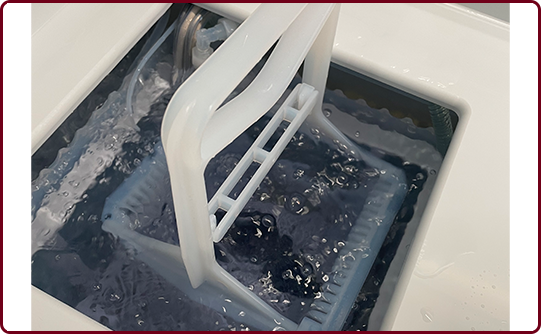
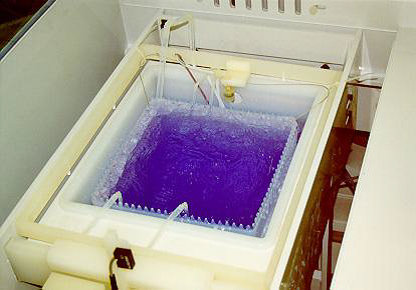
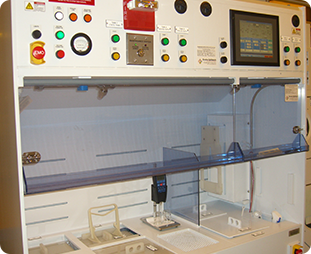
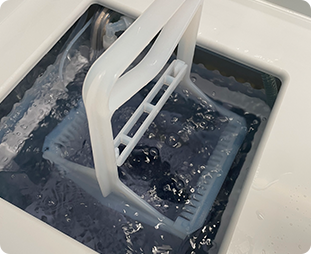
Ozone cleaning, also called “ozone processing” or “ozone strip,” uses ozone gas (O3) as a strong oxidizer to remove organic and inorganic contamination from semiconductor wafers, including photoresist residue. Because ozone breaks down into oxygen after reacting, it can replace part of the sulfuric acid and hydrogen peroxide (SPM) process step, reducing acid and DI water consumption. Modutek Corporation designs ozone cleaning lines to your process requirements and builds them in-house at its San Jose, California, facility.
An ozone generator converts high-purity oxygen gas into ozone using an electrical discharge, then delivers it to the wafer as a gas or dissolved in DI water. The ozone oxidizes organic residues into volatile byproducts that rinse away, while concentration, exposure time, and temperature are controlled to protect the wafer surface.
Modutek’s Ozone processing, also called ozone cleaning or strip, is a process commonly used in the semiconductor industry for surface cleaning/preparation and strip. Ozone (O3) is a highly reactive form of oxygen that can be produced with specialized equipment. Its powerful oxidizing properties enable it to effectively remove organic and inorganic contaminants from surfaces, including semiconductor wafers and other related components. Modutek can incorporate an Ozone line of equipment into your new wet
Process station. The Ozone system we design and build is based on
your process requirements, and over time, will reduce your operating costs.
Modutek’s acid fume scrubbers work by exposing contaminated air to a chemical solution. The acid in the air dissolves in the solution and is neutralized. Exposing the acid fumes to as large a surface area of neutralizing solution as possible is the key to an efficient operation. In Modutek’s fume scrubber design, the fumes pass over a wet packed bed. The packing material is made by industry leader Lantec and has an extremely high surface area. The packing material surfaces are covered by the neutralizing solution resulting in a removal rate for the fume chemicals that can reach 99 percent.
Generation: Ozone can be generated using an ozone generator by passing high-purity oxygen gas through it and applying an electrical discharge to convert O2 molecules to O3.
Surface Cleaning: Ozone processing can effectively clean semiconductor surfaces of various contaminants. It effectively removes organic residues, including photoresists, polymers, and oils, as well as inorganic contaminants, including metal oxides and particles. When ozone reacts with these substances, it breaks them down into volatile byproducts that are easily removed.
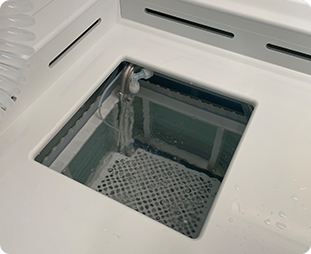
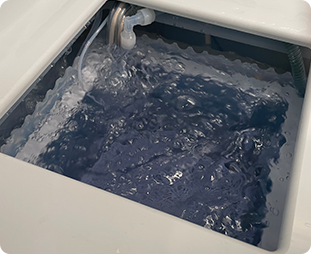
Ozone Cleaning Systems: Ozone processing can be performed using specialized equipment called “ozone cleaning systems.” These systems typically consist of an ozone generator, a gas delivery system, and a reaction chamber that houses the components being cleaned and is sealed to prevent ozone leakage.
Process Control: Ozone processing parameters such as concentration, exposure time, and temperature are meticulously managed to optimize cleaning performance while protecting semiconductor components from damage. Monitoring and control systems are used to ensure consistent cleaning results over time.
Advantages: Ozone processing offers numerous benefits for the semiconductor industry. As a dry-cleaning technique, ozone can replace wet chemical cleaners while simultaneously decreasing water consumption. Ozone gas has excellent penetrating power, enabling it to reach small gaps and crevices to clean complex structures with intricate patterns. In addition, ozone processing is environmentally friendly since it does not produce harmful byproducts that would otherwise pollute the environment.
Precautions: Ozone is a strong oxidizer and should only be used at low concentrations. Proper safety measures should be taken when working with ozone cleaning systems, such as exhaust ventilation, ozone detection sensors, and personal protective equipment.
Note: Ozone processing techniques and parameters may vary depending on the requirements of the semiconductor fabrication process and the contaminants being addressed. Semiconductor manufacturers often develop tailored ozone processing methodologies based on their needs and equipment capabilities.
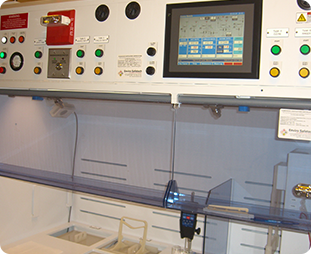
Modutek’s years of experience working with ozone cleaning processes provide you with a comprehensive package of process control, safety, and throughput. Our complete line of automated, semi-automated, and manual wet bench stations enables us to design ozone process systems that meet your specifications and budget constraints.
Generation: Ozone can be created using an ozone generator and passing high-purity oxygen gas through it and using electrical discharge to convert O2 molecules to O3.
Surface Cleaning: Ozone processing can be utilized to effectively clear semiconductor surfaces of various contaminants. It effectively eliminates organic residues such as photoresists, polymers, and oils, as well as inorganic contaminants like metal oxides and particles. When ozone reacts with these substances, it breaks them down into volatile byproducts that are easily removed.
Ozone Cleaning Systems: Ozone processing can be performed using specialized equipment called “ozone cleaning systems.” These systems typically consist of an ozone generator, gas delivery system, and reaction chamber, which houses the components being cleaned while sealed to prevent ozone leakage.


It can replace SPM for some applications, but not universally. Ozone-based cleaning can eliminate the need for sulfuric acid and peroxide in some spray-cleaning applications while cutting DI water use by over 20 percent, and ozone-DI water mixtures effectively strip hard-baked photoresist and leave surfaces with fewer particles and metal contaminants than SPM produces. The trade-off is speed: a typical ozone-water generator produces only about 10 to 30 ppm of ozone in water at room temperature, which limits photoresist removal to roughly 100 nanometers per minute, insufficient as a full SPM replacement in some cases. Many lines run ozone and SPM as complementary steps rather than a one-for-one swap. Modutek can help evaluate whether your process is a fit.
Ozone is safe when the system is engineered and monitored correctly, but it’s a regulated air contaminant, not an inert gas. OSHA sets a permissible exposure limit of 0.1 parts of ozone per million parts of air, averaged over an 8-hour shift, so ozone-cleaning equipment requires a sealed reaction chamber, exhaust ventilation, and ozone gas sensors to keep workplace concentrations below that limit. Modutek designs ozone systems as sealed process equipment for this reason, not an open bath.

Ozone cleaning targets organic residues, such as photoresist and process-related organic films, as well as some inorganic contaminants. The reaction breaks the material down into CO2 and other byproducts, depending on the photoresist’s composition, which rinse away rather than needing to be dissolved by acid.
Alongside it, in most cases. Ozone-based stripping is commonly used to remove resist residue on wafers after a separate ashing process, clearing what the ashing step leaves behind rather than replacing it outright.
It can, but the savings come from specific, checkable sources: less sulfuric acid and peroxide consumed, fewer bath change-outs, and lower DI water use, not a blanket guarantee. One documented ozone-based process cut DI water consumption by 22.4 percent while eliminating the use of sulfuric acid and peroxide in that application. Actual savings on your line depend on which step ozone replaces and how often that bath is currently changed.
Modutek designs and builds ozone cleaning equipment in-house at its San Jose, California, facility, sized to your chemistry, exposure time, and safety requirements.
Contact us if you need more information about using our ozone cleaning process to meet your process requirements or to request a quote.