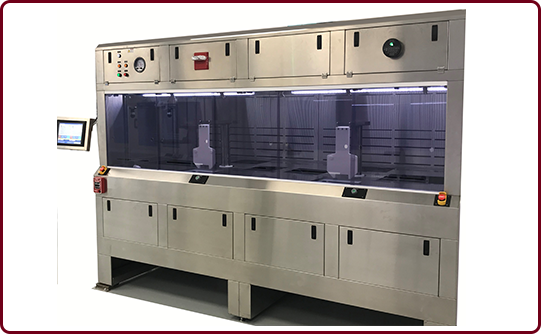
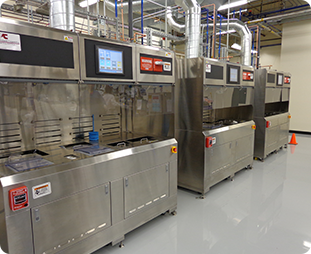
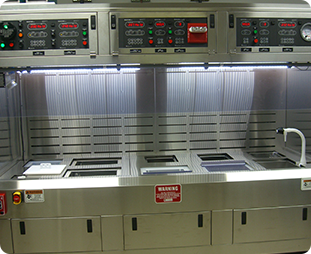
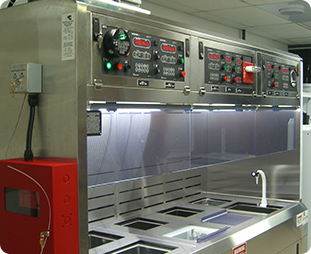
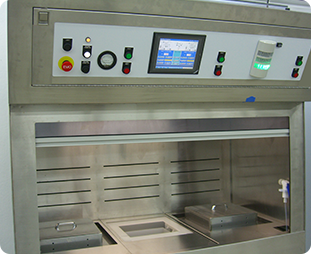
A stainless steel wet bench system is a solvent-rated process station built from 304 stainless steel, designed for wet processing applications where polypropylene construction is not chemically compatible. Stainless steel is the correct material choice for processes involving flammable or aggressive solvents such as acetone, IPA, or photoresist-stripping chemistries, where acid-rated plastics would degrade or pose a fire risk.
Modutek’s stainless steel wet bench systems are available in fully automated, semi-automated, manual, and dry-to-dry configurations. Each station is designed, assembled, and tested in-house at Modutek’s San Jose facility. Final acceptance testing is performed using DI water prior to shipment.


Photoresist stripping processes use solvents like acetone and IPA that are incompatible with standard polypropylene wet bench construction. Stainless steel stations are specified for these applications because the material withstands solvent exposure without degradation and can be configured with fire suppression systems and N2 purge interlocks to meet cleanroom safety requirements.
Ethylenediamine pyrocatechol (EDP) is an anisotropic etchant used in MEMS and silicon microfabrication. It requires precise temperature control and chemically resistant construction. Stainless steel wet benches provide the thermal stability and material compatibility required for controlled EDP processes in both research and production environments.
Semiconductor fabs and research facilities handling solvent-based process steps require stations that meet NFPA 70 and 79 wiring standards, seismic zone 4 structural certification, and SEMI compliance. Modutek stainless steel systems are available with third-party certification for all of these standards, making them suitable for regulated production environments.
Modutek’s Stainless Steel Wet Bench Systems can be customized to meet your specific wet-process requirements.
Polypropylene is the standard construction material for acid- and base-wet-bench applications, but it is not compatible with flammable solvents such as acetone and IPA. Stainless steel provides the chemical resistance and structural integrity required for solvent processes, and supports the integration of fire suppression and nitrogen purge systems needed for safe operation.
A dry-to-dry wet bench system moves wafers through the full process sequence, from the initial dry state through all wet chemical steps, and returns them dry at the end without requiring a separate drying station. This reduces handling steps, minimizes the risk of contamination, and improves throughput.
An Emergency Power Off (EPO) interlock is a safety system that cuts power to the station instantly when a hazardous condition is detected, such as a drop in exhaust airflow monitored by the photohelic gauge. At solvent stations, this is a critical safety feature because it prevents the accumulation of solvent vapor that could create a fire or explosion risk.
Yes. Modutek stainless steel wet bench systems are available with third-party certification for NFPA 70 and 79, SEMI standards, CE mark, NEC, and seismic zone 4 structural requirements, making them suitable for regulated fabs and research institutions with compliance mandates.