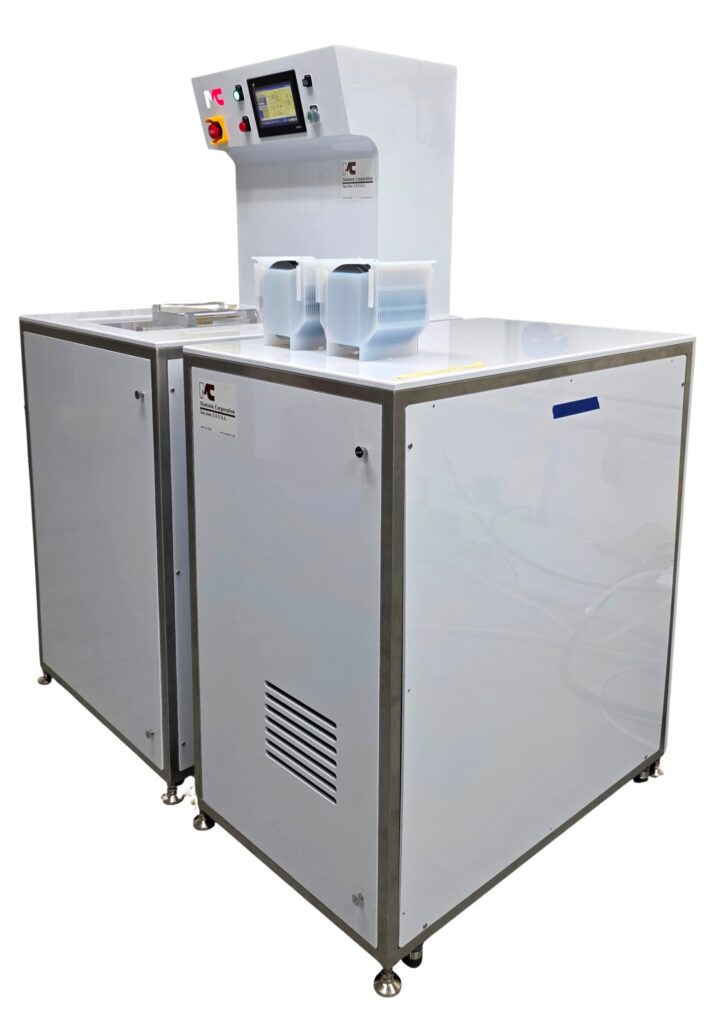
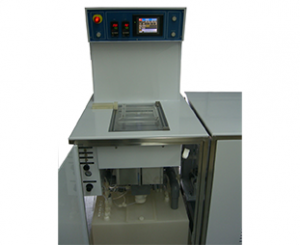
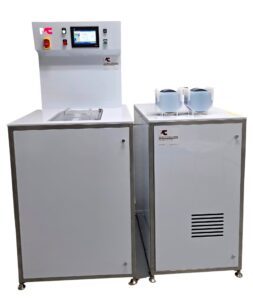
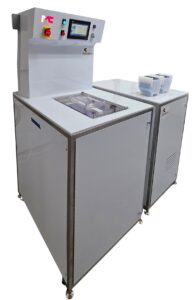
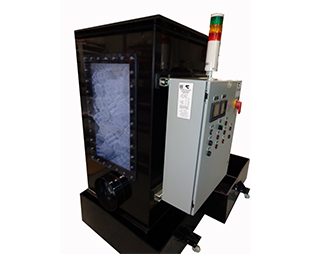
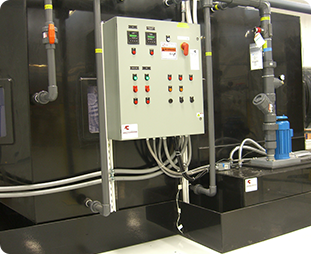
The Vacuum Metal Etcher is a fully automated batch processor, Model VES, designed for wet-chemical etching of aluminum layers on semiconductor wafers under vacuum rather than in an open bath. Etching aluminum generates hydrogen gas at the wafer surface. If that gas isn’t cleared immediately, it forms bubbles that block the reaction and leave behind “snow,” or a bridge across narrow metal lines. Modutek’s system processes up to two 150mm cassettes or one 200mm cassette per batch, and is designed, built, and tested in-house at its San Jose, California, facility.
Wet aluminum etching relies on an acid etchant, typically a blend of phosphoric, acetic, and nitric acids, that dissolves the aluminum while generating hydrogen gas as a byproduct at the metal surface. In an open bath, the gas clings to the wafer until agitation breaks the surface tension, and any bubble that doesn’t release blocks the etchant underneath it, leaving unetched aluminum “snow” and line-to-line “bridging” that shorts narrow-pitch wafers. An evacuating pump continuously pulls hydrogen gas away from the wafer surface as it forms, so the etch proceeds without trapped bubbles and without relying on a longer over-etch that would otherwise narrow the metal lines to compensate.


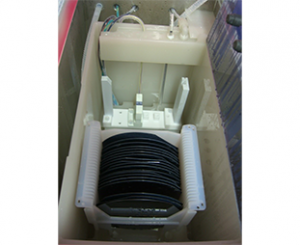
Place one or two standard cassettes in the etch process tank. One wafer is operator-selected and placed in the Endpoint Detector Assembly.
The user programs Etch/Over etch mode and Rinse Times. In Ready mode, Cycle Start switch evacuates the plenum which draws acid up from the reservoir into the etch tank. The Etch Tank Level switch closes the acid transfer valves and the etch cycle begins.
Etching continues until the etch time elapses or the Endpoint Detector senses that lines have been etched through the aluminum layer, and over etch time comes into effect to further define the circuit geometries.
Over etch time is programmed as either fixed time or a percentage of the Endpoint Detector time frame.
At the end of the total etching period the plenum is vented to atmosphere and the transfer valves open to drain the acid to the acid reservoir.
Nozzles in the etch tank then spray DI water onto the wafer. DI water is used in the quench rinse and the final overflow rinse period cycle.
The end of the cycle is signaled by an audible alarm which can be operator-cancelled with the Reset switch. Reset causes the DI water to drain, after which the cassettes can be removed. The spray nozzles are then N2 purged and the system is ready for the next process cycle.


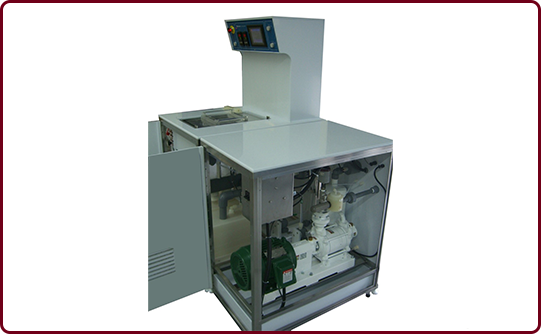
Housed in a separate module, the vacuum pump and controls are sequenced from the etch module. The water ring type vacuum pump requires minimal maintenance and is ideally suited for pumping hazardous and corrosive gases.
The pump is supplied with a continuous flow of city water which passes through two stages and encapsulates gases, preventing damage to the internal parts of the pump.
A separator on the discharge port extracts the gases and drains the water. A flow switch on the water input line cuts off the pump if the supply is . insufficient. A non-return valve on the vacuum port prevents back-siphoning of city water to the etch module if the pump stops.


It has been proven that to etch aluminum wafers with a vacuum etcher will eliminate the “snow” formation and reduce metal line width loss.
To eliminate the “snow” is difficult if the wafers are etched in hot bath. The “snow” comes from the hydrogen bubble which is generated in the chemical reaction during the etching process adhered on wafer surface to block the continual chemical reaction to leave the aluminum residue — “snow”. These bubbles will not release unless there is a force enough to break the surface tension, (such as the agitations in the etching which creates a friction to remove the bubble). The “snow” can be removed by using a longer over etch time, but the narrower metal line width will occur. The vacuum etcher is designed to solve this problem.
The narrow metal spacing and the areas which contain the higher steps are easy to hide the “snow”. We have extra difficulties to etch (2-3u thick metal) and (10u pitch negative resist) and some (narrow pitch) wafers. The “etch-bake-etch” process can solve some problems but does not have too much help on wafers due to the metal step too high to cover the entire aluminum side wall by melted resist in flow bake.
The feature of the vacuum etcher is that the aluminum wafers are etched in a vacuumed chamber. The hydrogen bubbles that releasing are so rapidly from the wafer surface in the low pressure environment (20 torr) during the etching because the surface tension is highly reduced in this condition. The infrared endpoint detection allows the process to optimize the over etch time to minimize the metal line.


Place one or two standard cassettes in the etch process tank. One wafer is operator-selected and placed in the Endpoint Detector Assembly.
The user programs Etch/Over etch mode and Rinse Times. In Ready mode, Cycle Start switch evacuates the plenum which draws acid up from the reservoir into the etch tank. The Etch Tank Level switch closes the acid transfer valves and the etch cycle begins.
Etching continues until the etch time elapses or the Endpoint Detector senses that lines have been etched through the aluminum layer, and over etch time comes into effect to further define the circuit geometries.
Over etch time is programmed as either fixed time or a percentage of the Endpoint Detector time frame.
At the end of the total etching period the plenum is vented to atmosphere and the transfer valves open to drain the acid to the acid reservoir.
Nozzles in the etch tank then spray DI water onto the wafer. DI water is used in the quench rinse and the final overflow rinse period cycle.
The end of the cycle is signaled by an audible alarm which can be operator-cancelled with the Reset switch. Reset causes the DI water to drain, after which the cassettes can be removed. The spray nozzles are then N2 purged and the system is ready for the next process cycle.


It has been proven that to etch aluminum wafers with a vacuum etcher will eliminate the “snow” formation and reduce metal line width loss.
To eliminate the “snow” is difficult if the wafers are etched in hot bath. The “snow” comes from the hydrogen bubble which is generated in the chemical reaction during the etching process adhered on wafer surface to block the continual chemical reaction to leave the aluminum residue — “snow”. These bubbles will not release unless there is a force enough to break the surface tension, (such as the agitations in the etching which creates a friction to remove the bubble). The “snow” can be removed by using a longer over etch time, but the narrower metal line width will occur. The vacuum etcher is designed to solve this problem.
The narrow metal spacing and the areas which contain the higher steps are easy to hide the “snow”. We have extra difficulties to etch (2-3u thick metal) and (10u pitch negative resist) and some (narrow pitch) wafers. The “etch-bake-etch” process can solve some problems but does not have too much help on wafers due to the metal step too high to cover the entire aluminum side wall by melted resist in flow bake.
The feature of the vacuum etcher is that the aluminum wafers are etched in a vacuumed chamber. The hydrogen bubbles that releasing are so rapidly from the wafer surface in the low pressure environment (20 torr) during the etching because the surface tension is highly reduced in this condition. The infrared endpoint detection allows the process to optimize the over etch time to minimize the metal line.


Place one or two standard cassettes in the etch process tank. One wafer is operator-selected and placed in the Endpoint Detector Assembly.
The user programs Etch/Over etch mode and Rinse Times. In Ready mode, Cycle Start switch evacuates the plenum which draws acid up from the reservoir into the etch tank. The Etch Tank Level switch closes the acid transfer valves and the etch cycle begins.
Etching continues until the etch time elapses or the Endpoint Detector senses that lines have been etched through the aluminum layer, and over etch time comes into effect to further define the circuit geometries.
Over etch time is programmed as either fixed time or a percentage of the Endpoint Detector time frame.
At the end of the total etching period the plenum is vented to atmosphere and the transfer valves open to drain the acid to the acid reservoir.
Nozzles in the etch tank then spray DI water onto the wafer. DI water is used in the quench rinse and the final overflow rinse period cycle.
The end of the cycle is signaled by an audible alarm which can be operator-cancelled with the Reset switch. Reset causes the DI water to drain, after which the cassettes can be removed. The spray nozzles are then N2 purged and the system is ready for the next process cycle.


Housed in a separate module, the vacuum pump and controls are sequenced from the etch module. The water ring type vacuum pump requires minimal maintenance and is ideally suited for pumping hazardous and corrosive gases.
The pump is supplied with a continuous flow of city water which passes through two stages and encapsulates gases, preventing damage to the internal parts of the pump.
A separator on the discharge port extracts the gases and drains the water. A flow switch on the water input line cuts off the pump if the supply is . insufficient. A non-return valve on the vacuum port prevents back-siphoning of city water to the etch module if the pump stops.


It has been proven that to etch aluminum wafers with a vacuum etcher will eliminate the “snow” formation and reduce metal line width loss.
To eliminate the “snow” is difficult if the wafers are etched in hot bath. The “snow” comes from the hydrogen bubble which is generated in the chemical reaction during the etching process adhered on wafer surface to block the continual chemical reaction to leave the aluminum residue — “snow”. These bubbles will not release unless there is a force enough to break the surface tension, (such as the agitations in the etching which creates a friction to remove the bubble). The “snow” can be removed by using a longer over etch time, but the narrower metal line width will occur. The vacuum etcher is designed to solve this problem.
The narrow metal spacing and the areas which contain the higher steps are easy to hide the “snow”. We have extra difficulties to etch (2-3u thick metal) and (10u pitch negative resist) and some (narrow pitch) wafers. The “etch-bake-etch” process can solve some problems but does not have too much help on wafers due to the metal step too high to cover the entire aluminum side wall by melted resist in flow bake.
The feature of the vacuum etcher is that the aluminum wafers are etched in a vacuumed chamber. The hydrogen bubbles that releasing are so rapidly from the wafer surface in the low pressure environment (20 torr) during the etching because the surface tension is highly reduced in this condition. The infrared endpoint detection allows the process to optimize the over etch time to minimize the metal line.


Aluminum wet etch typically uses a blend of phosphoric, acetic, and nitric acids, often referred to as a PAN etch. Nitric acid oxidizes the aluminum surface, phosphoric acid dissolves the resulting oxide layer and drives the overall etch rate, and acetic acid buffers the reaction to control how fast it proceeds. That same reaction generates hydrogen gas at the metal surface, which is the source of the bubbles that a vacuum etcher is built to remove.

Hydrogen bubbles generated during the reaction cling to the wafer surface and block the etchant underneath from continuing to react, leaving a residue of unetched aluminum known as snow. The bubbles won’t release on their own; only enough mechanical force, typically agitation, to break the surface tension will dislodge them. A longer over-etch can clear the snow, but it narrows the metal lines in the process, a trade-off a vacuum etcher is built to avoid.
Bridging occurs when snow residue connects two adjacent metal lines that were designed to be electrically isolated, creating an unintended short circuit. It’s most likely on wafers with narrow metal spacing or a higher step topology, since those geometries make it easier for snow to hide between features rather than clear during the etch.
The Model VES processes up to two 150mm cassettes or one 200mm cassette per batch run, with endpoint detection to signal when the etch is complete.
It improves both compared to relying on a longer over-etch in an open bath. Because the vacuum pump removes hydrogen gas as it forms rather than depending on extended etch time to clear snow, the process avoids the line narrowing that a longer over-etch would otherwise cause, which is why high yield and fast throughput are among the system’s core benefits.
Modutek designs, builds, and tests every vacuum metal etcher in-house at its San Jose, California, facility, sized to your cassette configuration and etch process.
Contact us if you need more information about using our vacuum metal etcher system or to request a quote.