
- Home
- About Us
- Products
- Applications
- Support
- Blog
Wafer Etching Process
The wafer etching process is the set of chemical methods used to remove or shape material from a silicon wafer to create the structures and connections required in integrated circuit and MEMS manufacturing. Common industry methods include KOH, BOE, silicon nitride etch, and Piranha etch, applied to silicon, gallium arsenide (GaAs), and metals such as aluminum, copper, and gold. Modutek provides wet bench technology and equipment to support this full range of wafer etching applications, used by process engineers at semiconductor manufacturing facilities and research centers to meet their wafer processing requirements.
KOH Etching
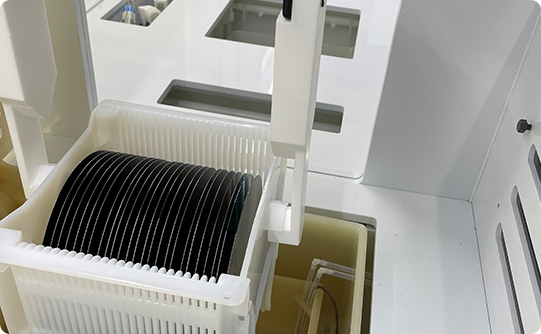
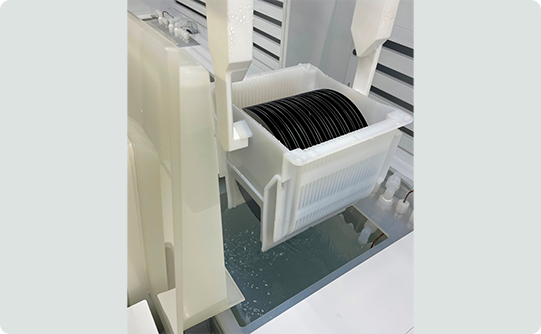
Etching silicon wafers with potassium hydroxide (KOH) creates microscopic structures in the silicon. The etching rate depends on the etching bath temperature, KOH concentration, the crystalline structure, and any impurities in the silicon wafer. KOH etching provides a low-cost, repeatable process that etches quickly. Modutek improves KOH etching applications using either the TFa or TT series of PFA Teflon tanks. For more details, refer to the article “Improving the KOH Etching Process Using Teflon Tanks“.
Buffered Oxide Etch (BOE)
BOE, also known as buffered HF or BHF, is primarily used to etch thin films of silicon nitride or silicon dioxide. It consists of hydrofluoric acid and a buffering agent such as ammonium fluoride. BOE provides a consistent, repeatable process, does not undercut masked oxide, does not contaminate or stain diffused silicon surfaces, and is compatible with photoresist. Modutek supports the BOE process specifically with the F SERIES sub-ambient filtered etch bath.
Silicon Nitride Etching
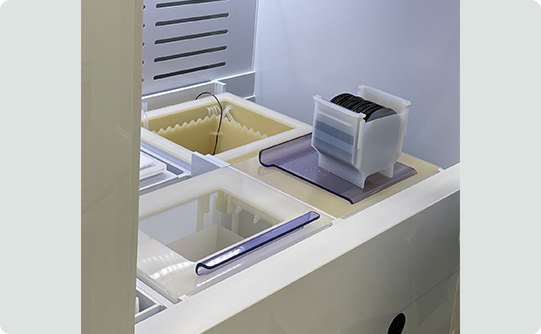
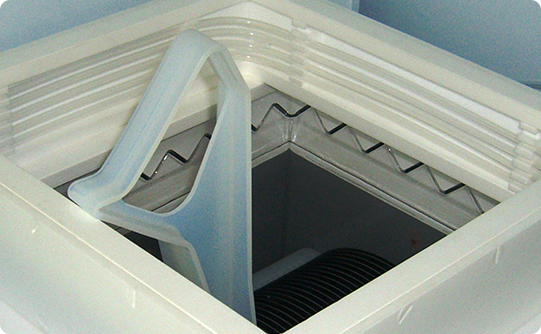
Silicon nitride is used as a masking material in semiconductor manufacturing. It is deposited on the silicon wafer as a thin film and is etched with hot phosphoric acid. In a nitride etch bath, a hot phosphoric acid strip is performed at 180 degrees C. Nitride etch baths provide precise temperature control by regulating the deionized water-to-phosphoric acid ratio. Modutek’s silicon nitride etch baths provide accurate process control, consistent repeatability, and high safety. For more details on process control and safety, refer to the article “Silicon Wafer Etching Processes for Wet Processing Applications“.
Copper, Gold, and Aluminum Etching
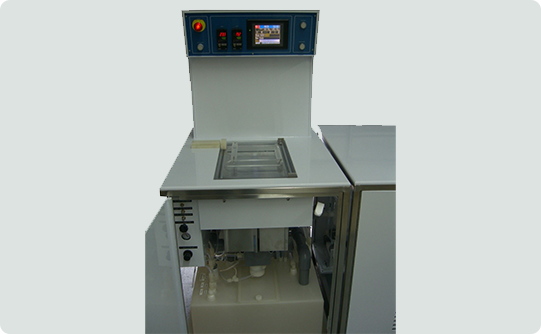
Microelectronic devices developed on silicon wafers must use metallic connections to conduct electric signals. Metals used for this purpose include aluminum, copper, or gold, which are deposited on the silicon wafer. Some metals must be etched during silicon wafer fabrication. Etching metals can be challenging; effective etching relies on selecting the appropriate chemicals and process. In these cases, using Modutek’s Vacuum Metal Etcher provides a precise process for etching metal layers. Wafers are etched within a vacuum so that hydrogen bubbles, an etching reaction that causes “snow” and “bridging,” are immediately removed from the surface of the wafer. An evacuating pump in the vacuum metal etcher directly exhausts the hydrogen bubbles. Modutek’s equipment can use various etchant solutions to etch different metals.
Wafer Etching Process FAQs
1. How Do I Choose Between KOH, BOE, and Piranha Etch for My Application?
The right etching method depends on the material being removed and the structure being created. KOH anisotropically etches silicon to form precise microscopic structures; BOE selectively etches thin films of silicon nitride or silicon dioxide without undercutting the mask; and Piranha etch removes organic residues and photoresist rather than shaping the silicon itself. Many fabrication processes use more than one of these methods at different steps.
2. Can Wafer Etching Equipment Be Customized for Both Silicon and Gallium Arsenide Substrates?
Etching chemistry and equipment selection depend on the substrate material and process step, since silicon and gallium arsenide respond differently to the same etchants. Modutek’s wet bench systems and tank configurations can be adjusted to match the specific substrate and etching chemistry required for a given application.
3. What Makes Metal Etching More Challenging Than Silicon or Oxide Etching?
Metal etching requires removing byproducts, such as the hydrogen bubbles produced when etching aluminum, copper, or gold, without redepositing them on the wafer surface or interfering with the reaction. This differs from silicon or oxide etching, where the main variables are concentration, temperature, and crystalline structure rather than gas-byproduct management.
4. What Safety Precautions Are Needed When Handling KOH, BOE, or Piranha Etch Chemicals?
KOH, BOE, and Piranha etch solutions are all corrosive, and Piranha etch in particular is a strong oxidizer that generates heat during preparation. All three require proper ventilation, chemically compatible equipment, and adherence to facility safety protocols. Confirm specific handling procedures with your facility’s safety officer and the chemical manufacturer’s safety data sheets.
5. What Equipment Does Modutek Provide to Support the Full Range of Wafer Etching Processes?
Modutek supports wafer etching with PFA Teflon tanks for KOH etching, F Series sub-ambient filtered etch baths for BOE, Nb Series silicon nitride etch baths for nitride etching, and the Vacuum Metal Etcher for aluminum, copper, and gold etching, so each etching chemistry runs in equipment built for its specific process requirements.
Request a Consultation to Discuss Your Wafer Etching Process Requirements
Modutek has been a premier supplier of semiconductor manufacturing equipment for over 40 years, offering a full line of wet processing equipment to support a wide variety of wafer etching process applications. The equipment delivers reliable and repeatable results safely and accurately.
Contact Modutek for a free quote or consultation to select the right equipment for your wafer etching process requirements.