Modutek

Wet Bench Manufacturer | Wet Process Equipment | Modutek

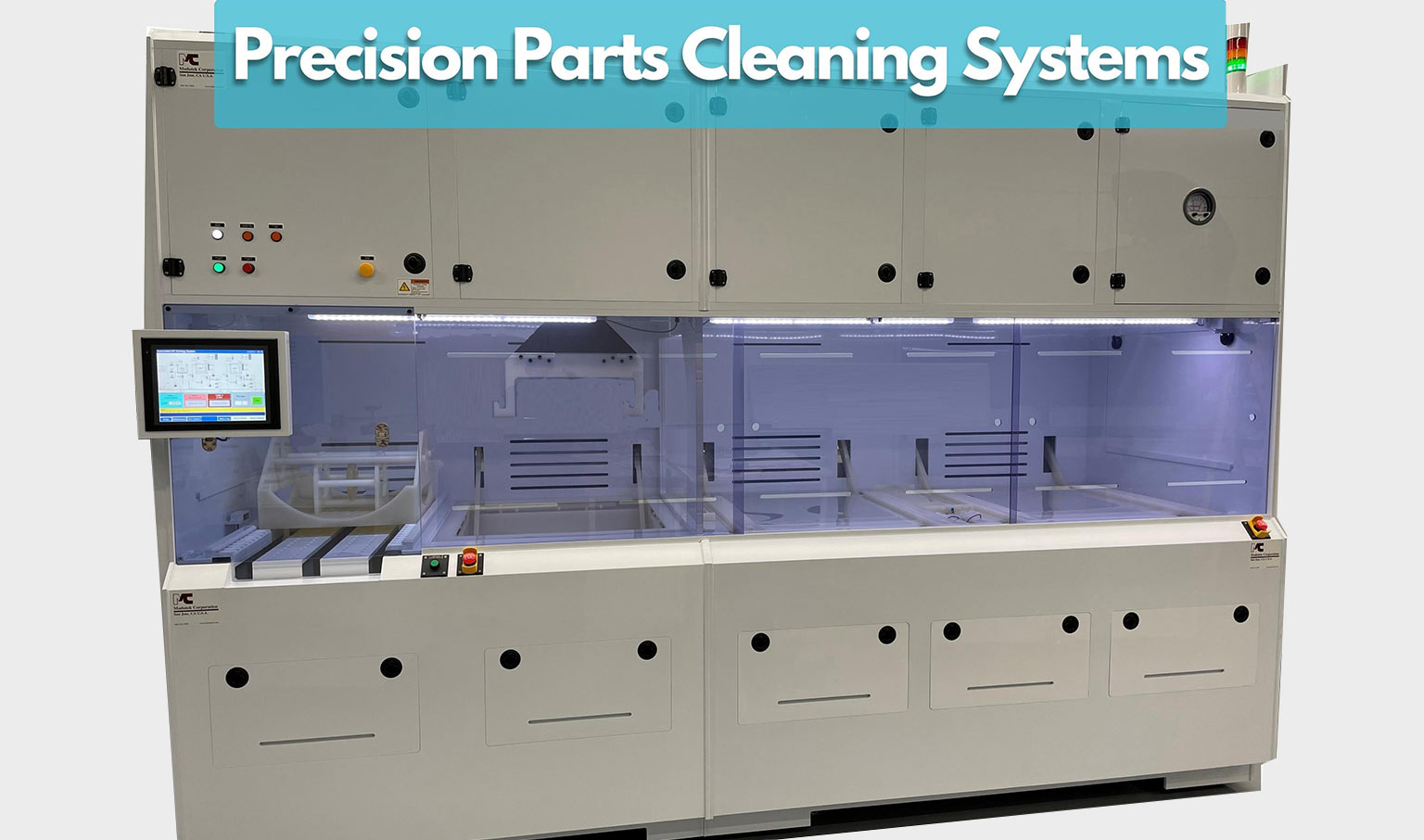
Precision Parts Cleaning Systems

Precision parts cleaning systems are engineered equipment systems designed to remove particles, organic residues, metallic contaminants, and surface impurities from critical components used in semiconductor, aerospace, medical, and high-tech manufacturing environments. These systems ensure parts meet strict cleanliness, reliability, and performance standards required for advanced production processes.

Precision parts cleaning systems typically integrate chemical cleaning, ultrasonic or megasonic agitation, filtration, drying, and contamination control within controlled cleanroom environments to deliver repeatable, high-purity results.

At Modutek, we design complete precision parts cleaning solutions tailored to your process requirements, working closely with process engineers, equipment engineers, facility managers, and safety teams to ensure proper integration, installation, and long-term performance.

Cleaning Methods Used in Precision Parts Cleaning Systems

This cleaning technique utilizes chemical solutions or solvents to dissolve or remove contaminants from surfaces. Various chemicals and formulations may be used depending on the type of contamination present and the material being cleaned.

Ultrasonic Cleaning: Ultrasonic cleaning uses high-frequency sound waves that typically range from 20-200kHz to create microscopic bubbles in the liquid cleaning solution. The implosion of these bubbles produces intense cleaning action which dislodges surface contaminants.

Precision Parts Cleaning System Video

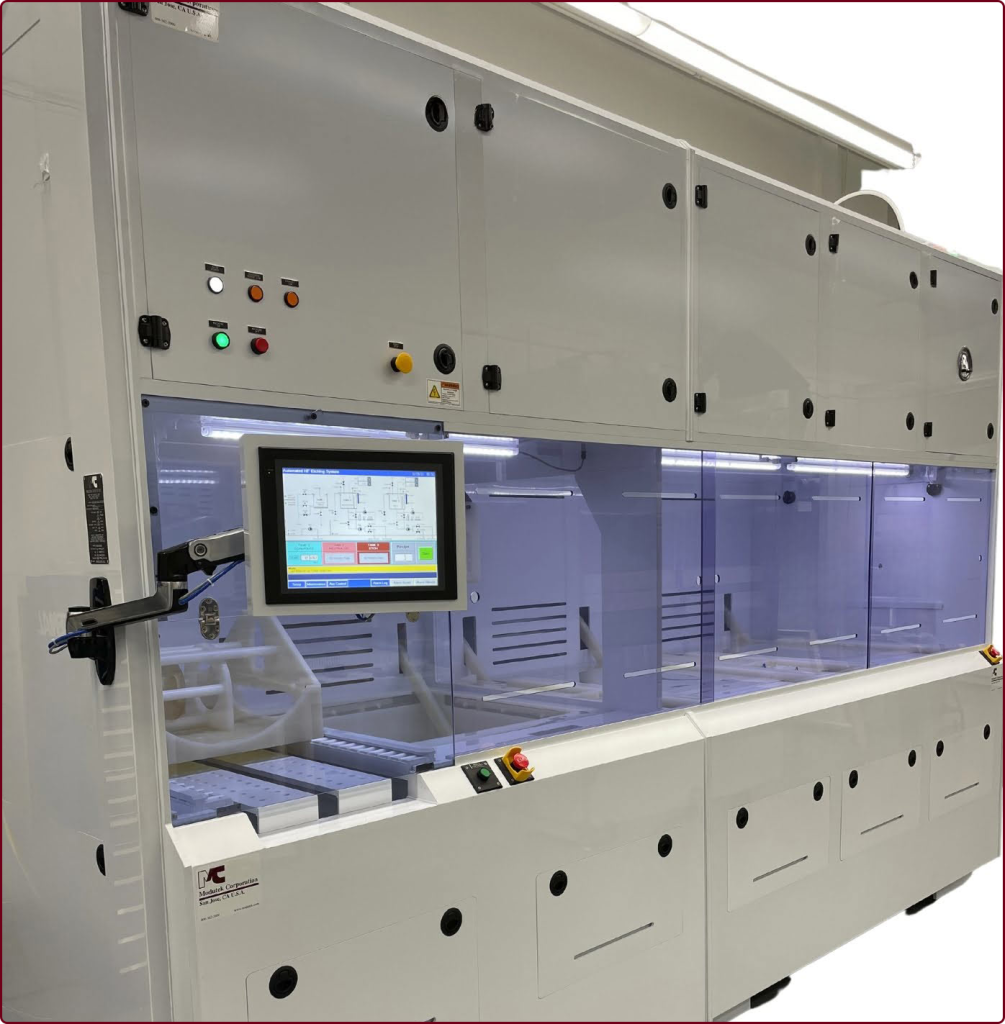
precision parts cleaning system
Precision-Parts-Cleaning-Systems

Megasonic Cleaning

Megasonic cleaning is similar to ultrasonic cleaning but operates at much higher frequencies, typically at or above 1.0MHz. It is highly effective at removing sub-micron particles during the manufacturing process of semiconductors, MEMs, and solar panels and can be used for delicate parts.

Cleaning Equipment

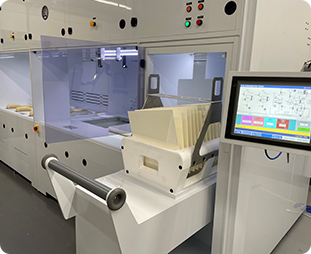
Batch Cleaners: For precision parts cleaning systems, batch cleaners are an invaluable asset. They consist of tanks or chambers where parts can be immersed in cleaning solutions or exposed to processes like ultrasonic and megasonic agitation. Batch cleaners provide effective cleaning capabilities while accommodating various part sizes and shapes.

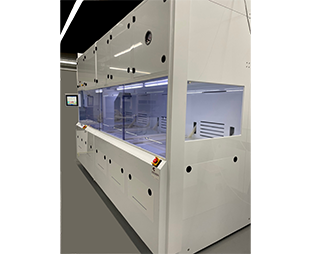
Automated cleaning systems integrate various cleaning processes, handling, and drying steps within a single system. They are used in high-volume production environments and provide consistent cleaning results.

Cleanroom Environment

Precision parts cleaning systems are used in the semiconductor industry in a controlled cleanroom environment to minimize contamination. Cleanrooms have stringent air quality standards that include humidity, temperature, and particulate control to help eliminate potential sources of contamination during cleaning processes.

Contamination Control

Contamination control is critically important in precision parts cleaning. Below are some considerations regarding its implementation:

Part Handling: Proper handling techniques that prevent operator contamination include gloves and cleanroom-compatible tools when handling components.

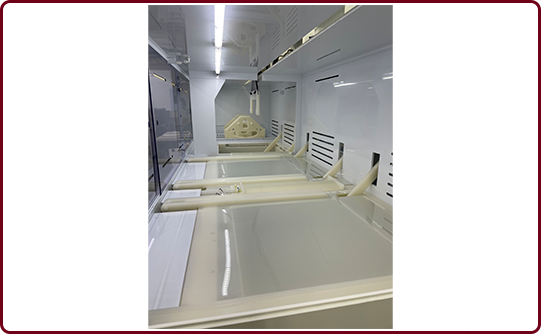
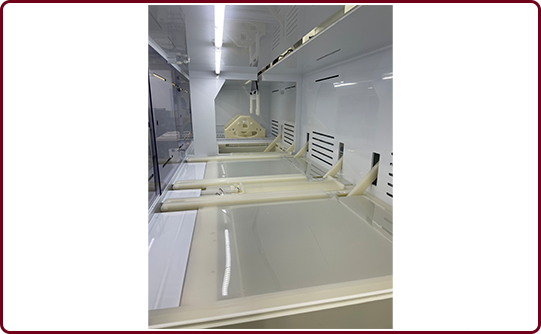
Precision-parts-cleaning-system-deck-view
precision-last-1.png

Cleaning Solutions and Chemicals: Selecting appropriate cleaning solutions and chemicals is essential to efficiently eliminate contaminants without damaging parts.

Filtration: Filtration systems remove particles or impurities from cleaning solutions to provide consistent performance.

Drying: After cleaning, parts must be dried thoroughly to avoid watermarks and accumulation of residues. Spin drying or low-contamination drying techniques may be used.

Quality Control

Quality control measures should be implemented to verify the effectiveness of a cleaning process. This can include visual inspections, cleanliness testing using techniques such as particle counting or surface analysis, and validation of process parameters.

Specific cleaning processes and requirements vary based on the type of precision parts, contamination sources, and semiconductor manufacturing processes involved. Modutek works directly with customers to ensure their precision parts cleaning systems are designed to meet the specific cleaning procedures required by each customer’s unique process.

Benefits

Features

Benefits

Features

Benefits

Benefits

Features

Features

FAQs - Precision Parts Cleaning Systems

1. What is a precision parts cleaning system, and what is it used for?
A precision parts cleaning system is a wet processing system engineered to remove contaminants — including oxides, organic residues, particles, and metallic impurities — from semiconductor wafers, microelectronic components, and other critical substrates. These systems use controlled chemical processes, precise temperature management, and ultra-pure DI water rinsing to achieve the contamination-free surfaces required in semiconductor fabrication and R&D environments. They are used across wafer fabs, MEMS manufacturing, advanced packaging, solar cell production, and research laboratories.
2. What types of precision parts cleaning systems does Modutek offer?
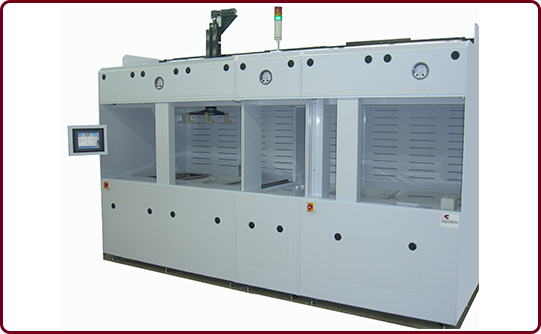
Modutek’s precision parts cleaning systems are available in manual, semi-automated, and fully automated configurations to match different production volumes and process requirements. Manual systems give operators direct control and are well-suited for R&D and low-volume applications. In contrast, fully automated systems use robotic wafer handling and recipe-driven process control for high-throughput, repeatable manufacturing. Semi-automated systems offer a practical middle ground, providing programmable process sequences with manual chemical handling.
3. What cleaning chemistries are compatible with precision parts cleaning systems?

Precision parts cleaning systems are designed to support a broad range of semiconductor wet processing chemistries, including SC-1, SC-2, SPM (Piranha), HF, BOE, and APM sequences, as well as DI water rinse cycles. All wetted components are constructed from chemically compatible materials — such as PVDF, polypropylene, or quartz — to prevent contamination and system degradation. Modutek configures each system for single-chemistry applications or multi-step sequential cleaning processes, depending on the substrate and process requirements.
4. How do precision parts cleaning systems maintain precise process control?
Precision parts cleaning systems use programmable logic controllers (PLCs) to manage process sequences, chemical exposure times, and rinse cycles with consistent accuracy. Closed-loop temperature control, chemical concentration monitoring, and flow control with N₂ bubbling work together to maintain tight process tolerances across every run. Modutek’s systems include data logging and reporting functions that generate trackable process records to support quality assurance, yield analysis, and experimental repeatability.
5. Can precision parts cleaning systems be customized to meet specific process or facility requirements?
Yes — precision parts cleaning systems can be custom-configured to meet specific process chemistries, substrate types, tank layouts, automation levels, and facility utility constraints, including electrical, plumbing, and exhaust requirements. Modutek works directly with process engineers and facilities managers during the design phase to align system configuration with both process performance goals and site-specific requirements. This flexibility allows each system to be built to the exact specifications of the application rather than adapted from an off-the-shelf design.
6. What safety features should precision parts cleaning systems include?
Precision parts cleaning systems should include chemical-resistant enclosures, exhaust ventilation designed for the specific chemistries in use, overflow and leak detection sensors with automatic shutoff, and emergency drain systems for rapid chemical evacuation. Interlocked access panels, splash guards, and compliance with applicable safety standards such as SEMI and NFPA are critical requirements for protecting operators and meeting facility safety regulations. Modutek integrates these safety features into every system design and provides full safety documentation to support operator training and regulatory compliance audits.
7. How are precision parts cleaning systems tested and qualified before delivery?
Every precision parts cleaning system should undergo a Factory Acceptance Test (FAT) before shipment to verify that all mechanical, electrical, and software functions meet the agreed-upon specifications. Pre-delivery testing should include process simulation runs, safety interlock checks, and a full documentation review covering wiring diagrams, process records, and operator manuals. Modutek invites customers to witness or participate in FAT testing at its facility to ensure the system performs to specification before it arrives on-site.
8. What should be considered when evaluating the total cost of ownership for a precision parts cleaning system?
The total cost of ownership for a precision parts cleaning system goes beyond the purchase price. It includes factors such as energy consumption, chemical usage efficiency, maintenance frequency, spare parts availability, and the cost impact of unplanned downtime. Systems built with durable, chemically resistant materials and a modular design enable component-level upgrades rather than full-system replacement, extending useful service life. Modutek offers comprehensive service and maintenance plans alongside competitively priced precision parts cleaning systems, making it straightforward to accurately project long-term operational costs and ROI.

Resources

Contact our team to discuss your precision parts cleaning requirements.