 Summary:
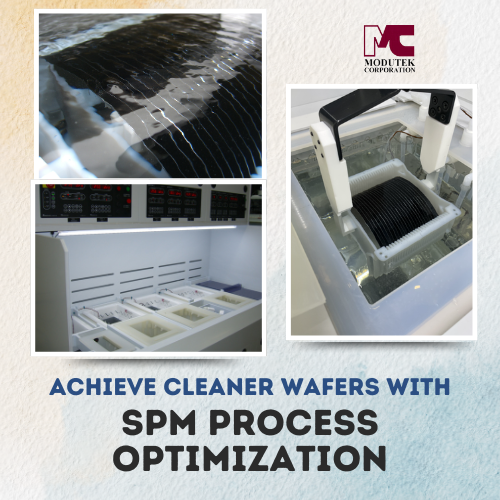
Discover how Modutek’s dual-tank SPM wafer cleaning process and advanced wet bench systems reduce costs, improve efficiency, and ensure cleaner wafers for semiconductor manufacturers.
Editor’s Note: This article was originally published in March 2018 and has been updated with additional information and reposted in August 2025.
Table of Contents
- Introduction: Why Efficiency Wafer Cleaning Matters.
- Limitations of Traditional SPM Methods.
- How Modutek’s Dual-Tank “Bleed and Feed” System Works.
- Benefits: Lower Cost, Greater Efficiency, Cleaner Wafers.
- Built-in Integration with New Wet Benches.
- Boosting Wafer Strip Process and Throughput
- Why Choose Modutek.
- Conclusion and Next Steps.
1. Introduction: Why Efficiency Wafer Cleaning Matters
For semiconductor manufacturers and research centers, the efficiency of the wafer cleaning process directly impacts yield, reliability, and overall production costs. Even trace contaminants on wafer surfaces can compromise device performance, increase scrap rates, and drive up operational expenses.
Traditional SPM (sulfuric acid and hydrogen peroxide) cleaning methods are widely used; however, these legacy approaches introduce ongoing challenges, including high chemical consumption, inconsistent cleaning quality, and mounting regulatory pressure due to hazardous waste management.
Modutek’s dual-tank SPM innovation offers a breakthrough for organizations seeking a more stable, cost-effective, and environmentally responsible wafer cleaning solution. By fundamentally redesigning how SPM is managed, Modutek enables both semiconductor manufacturers and research centers to achieve superior results, lower costs, and enhanced process reliability in their critical cleaning applications.
Key Points:
- Wafer cleanliness is fundamental to meeting yield and quality targets in high-tech manufacturing and research.
- Legacy SPM methods increase waste and costs and introduce variability in process outcomes.
- Modutek’s innovation delivers stable, high-efficiency cleaning for demanding semiconductor and research environments.
2. Limitations of Traditional SPM Methods
The traditional sulfuric acid and hydrogen peroxide (SPM) method is a longstanding choice for the wafer cleaning process, but it is plagued by instability and inefficiency. At elevated temperatures (typically 130–140°C), hydrogen peroxide decomposes rapidly into water, resulting in an unpredictable drop in its concentration in the cleaning solution. To maintain effectiveness, operators must frequently add more hydrogen peroxide, a practice known as “spiking”. This can cause fluctuations in the wafer strip rate and overall process variability.
This cycle leads to several operational challenges:
 Short chemical life: The SPM mixture is typically usable for only about 8 hours before needing replacement, resulting in multiple shutdowns of wet bench stations each day.
- Increased chemical costs: Frequent replacement and spiking drive up operational expenses.
- Regulatory burden: Large volumes of hazardous waste require strict environmental handling and increase disposal costs.
- Inconsistent results: Variability in chemical concentrations impacts process control and can compromise wafer quality.
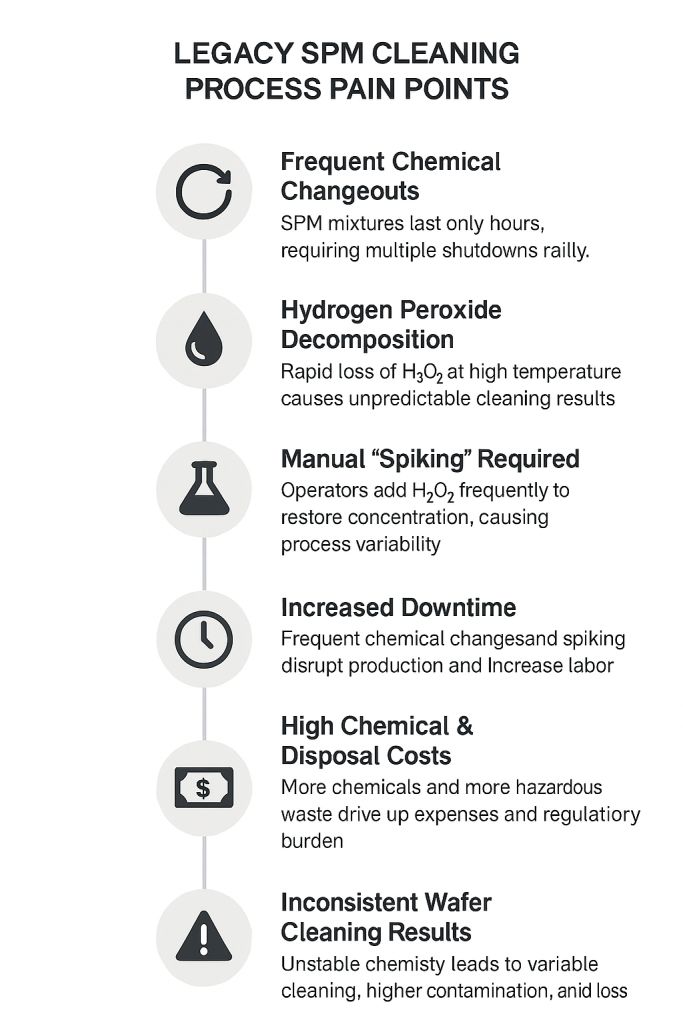 Short chemical life: The SPM mixture is typically usable for only about 8 hours before needing replacement, resulting in multiple shutdowns of wet bench stations each day.
Due to these limitations, legacy SPM cleaning in wet benches results in higher costs, increased downtime, and challenges in achieving consistent wafer quality and regulatory compliance.
3. How Modutek’s “Bleed and Feed” System for the SPM Process Works
Modutek’s advanced dual-tank “Bleed and Feed” system is designed to address the instability and high maintenance costs often associated with traditional sulfuric acid–peroxide mixture (SPM) cleaning methods. By automatically refreshing the chemical balance and minimizing operator intervention, the system supports consistent wafer strip performance and longer bath life.
The system utilizes two separate tanks: a Process Tank where wafers are cleaned, and a Holding Tank that stores heated sulfuric acid. These tanks work together under the control of a Programmable Logic Controller (PLC) that maintains optimal SPM concentration.
How the System Works
 Step 1:
A programmable amount of used SPM solution is drained from the Process Tank before each wafer cleaning cycle.- Step 2:
An equal amount of heated sulfuric acid (H₂SO₄) is transferred from the Holding Tank into the Process Tank to refresh the chemical balance of the SPM mixture. - Step 3:
The Holding Tank is replenished with concentrated sulfuric acid in a controlled amount to maintain the desired mixture ratio. - Step 4:
The Process Tank receives a precisely measured dose of hydrogen peroxide (H₂O₂) to make a more aggressive solution for the complete removal of carbon or organic residue. - Step 5:
The PLC automates all fluid transfers and dosing operations on both tanks, ensuring accuracy, safety, and minimal operator involvement. - Step 6:
When a complete chemical replacement is needed (typically after 168 hours of operation), the quick-drain feature rapidly empties and refills the process tank, minimizing downtime.
 Step 1:
This automated, closed-loop system delivers more stable chemical performance, reduces waste, and significantly lowers operating costs—making it ideal for both high-volume semiconductor fabs and precision-focused research labs.
Key Benefits for Process Engineers:
- Consistent process control with stable strip rates and repeatable results.
- Lower operating costs through reduced chemical consumption and hazardous waste disposal.
- Improved safety and automation that reduces manual chemical handling.
- Increased uptime due to fewer chemical changeouts and automated maintenance cycles.
4. Benefits: Lower Cost, Greater Efficiency, Cleaner Wafers
Modutek’s optimized SPM process delivers tangible benefits for semiconductor manufacturers using advanced wet bench equipment. By automating chemical management and maintaining stable conditions, facilities can achieve higher productivity and improved results across every wafer strip process.
Core advantages include:
- Significant chemical waste reduction: Automated dosing and extended chemical lifespan can cut chemical consumption by up to 80%, minimizing both costs and hazardous waste disposal.
- Less downtime and higher throughput: With the dual-tank system, wet benches can operate continuously for days, reducing interruptions for chemical changes.
- Consistent, repeatable cleaning results: Precise process control means wafers are cleaned to a higher standard, supporting better substrate quality and lower contamination risks.
- Enhanced safety and regulatory compliance: Automation reduces operator exposure to chemicals and helps facilities meet stringent safety and environmental regulations.
- Reduced manual intervention: Automated wet bench systems free up engineering and operations teams for higher-value tasks.
The optimized SPM approach is a strategic upgrade for organizations focused on efficiency, quality, and compliance.
5. Built-in Integration with New Wet Benches
The advanced SPM optimization process is available exclusively in newly manufactured wet benches, ensuring that every installation is engineered for maximum performance, safety, and compliance from the outset. This approach meets the stringent requirements of Facility Managers responsible for environmental compliance and equipment reliability, as well as Process Engineers seeking precise control and consistent results.
Key details for process engineers:
- Not a retrofit solution: The dual-tank design and PLC automation are built into the system during fabrication, so the optimized SPM process is only offered with new Modutek wet benches—not as an upgrade to existing equipment.
- Tailored configuration: Every wet bench is custom-built to fit the facility’s specific cleanroom layout, process needs, and fab infrastructure, meeting electrical, plumbing, and safety requirements.
- Built-in regulatory compliance: Systems are delivered to support hazardous waste management and environmental regulations, addressing key pain points for Facility Managers.
- Operator safety and training: Automated controls reduce direct chemical handling, supporting facility goals for safety and minimizing operator risk, while Modutek provides comprehensive support and training.
- Proven reliability: The engineered integration ensures long-term reliability and easier maintenance, supporting Process Engineers’ need for consistent, high-yield wafer cleaning and reduced downtime.
By specifying new wet benches with integrated SPM optimization, organizations position themselves for safer, more efficient, and regulation-ready operations, directly addressing the most critical concerns of both engineering and facility management teams.
6. Boosting Wafer Strip Process and Throughput
Modutek’s optimized SPM technology provides precise chemical control, directly improving outcomes in the wafer strip process to enhance throughput for both R&D and high-volume production environments. By maintaining a stable chemical environment, the system reduces the risk of particle contamination while consistently delivering cleaner wafers—key factors that impact yield, product quality, and operational efficiency.
Process engineers benefit from tighter control over strip rates, which enables more precise removal of photoresist and other residues, while facility teams gain from reduced downtime and lower chemical waste. With each cycle, wafers are exposed to a more consistent, stable SPM environment, minimizing the risk of particle contamination and supporting better substrate integrity.
This directly translates into:
- Higher yield: Reduced contamination and rework due to a cleaner, more controlled strip process.
- Greater process repeatability: Automated “bleed and feed” logic maintains SPM stability, ensuring consistent performance across batches.
- Increased operational efficiency: Longer chemical life (up to one week) minimizes changeovers and maximizes tool uptime.
- Real-time optimization: Integrated PLC controls track and adjust chemical dosing, supporting process monitoring and continuous improvement.
- Scalability: Ideal for both pilot lines in R&D environments and high-volume production fabs.
For facilities focused on output quality and equipment utilization, Modutek’s dual-tank SPM system offers a high-performance solution that enhances wafer strip precision and supports sustained throughput improvements over time.
7. Why Choose Modutek
With over 40 years of experience in semiconductor wet processing, Modutek is recognized as a trusted partner for manufacturers and research organizations seeking high-performance, reliable solutions. The company’s track record in delivering engineered systems—tailored to exact process, safety, and regulatory requirements—sets it apart in an industry where precision and uptime are mission-critical.
Modutek’s wet bench systems are not just configurable—they are custom-built to meet each facility’s specific layout, chemical handling needs, and operational goals. The company provides full lifecycle support, from initial concept and design through installation, training, and long-term service, ensuring a seamless integration into cleanroom environments.
Why Modutek stands out:
🛠️ Proven Engineering Expertise: More than four decades designing semiconductor wet processing systems with precision and customization in mind.
📐 Tailored System Integration: Every wet bench is configured to match the fab’s cleanroom layout, electrical and plumbing specs, and safety protocols.
📊 Documented ROI: Customers report measurable savings in chemical use, reduced downtime, and improved wafer quality.
🤝 End-to-End Support: In-house engineers manage the whole process, from design approval through installation and final acceptance, backed by responsive service and training.
🏆 Trusted Industry Reputation: Modutek’s equipment is used by leading manufacturers, R&D labs, and universities across the US and around the world.
Organizations seeking dependable, high-performance wet processing solutions choose Modutek for its in-house expertise, support, and focus on achieving long-term results.
8. Conclusion and Next Steps
Modutek’s optimized wafer cleaning process represents a strategic advancement for semiconductor manufacturing facilities seeking better control, lower operating costs, and consistent quality. By combining a dual-tank SPM approach with advanced PLC automation, Modutek addresses the need for precise process control, high safety standards, and regulatory compliance, priorities for both Process Engineers and Facility Managers.
Summary of key advantages:
- Sustained process consistency: Automated chemical management reduces variability, resulting in reliably cleaner wafers and improved substrate quality.
- Reduced operational costs: Lower chemical usage, fewer changeovers, and minimized downtime contribute to substantial cost savings and higher ROI.
- Enhanced safety and compliance: Built-in safety features and environmental controls make it easier for teams to meet strict industry standards.
- Custom support and integration: Modutek’s engineering team partners with facilities to tailor solutions, streamline installations, and provide ongoing training.
Contact Modutek to discuss how SPM process optimization can reduce costs and improve your processing performance and results.
Frequently Asked Questions (FAQs)
Q1: Can Modutek’s SPM optimization be added to our existing wet benches, or do we need to purchase new systems?
A: The SPM optimization system is typically designed and installed for new Modutek wet benches, but can be retrofitted into existing Modutek equipment. Contact Modutek for more details.
Q2: How does this system affect chemical usage and hazardous waste management?
A: Modutek’s dual-tank SPM process can reduce chemical waste by up to 80%. This results in lower operating costs and a substantial reduction in hazardous waste disposal, an essential benefit for facilities that must comply with stringent environmental and safety regulations.
Q3: What impact does the SPM process have on wafer cleaning consistency and substrate quality?
A: By maintaining stable chemical concentrations throughout the wafer cleaning process, the system ensures repeatable, high-quality results. This minimizes contamination risks and supports higher production yields, which is critical for meeting stringent manufacturing targets.
Q4: How long does the SPM mixture last in continuous operation using the “bleed and feed” process, and what does that mean for downtime?
A: The optimized SPM mixture typically lasts up to 168 hours without needing a complete replacement, compared to only about 8 hours with traditional methods. This significantly reduces downtime, enabling more consistent production schedules and increased throughput.
Q5: Does Modutek provide support for system integration, operator training, and compliance documentation?
A: Yes. Modutek’s in-house engineering team partners with customers from design through installation, providing comprehensive training and documentation. This helps facilities with easy onboarding, maintain compliance, and ensure safe, efficient operations.